introduction
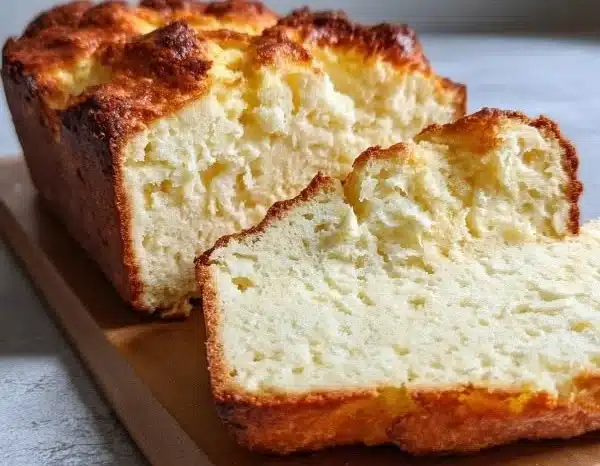
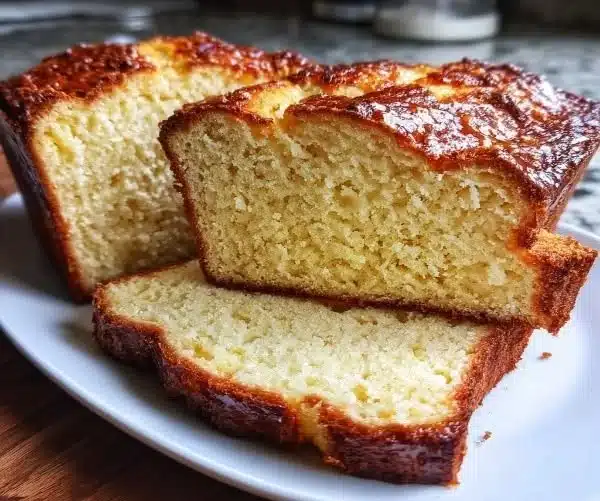
This cozy, family-friendly loaf is a Yogurt Bread Gluten-Free Zero Carb Option that delivers tender, moist slices with very low net carbs — perfect for toast, sandwiches, or soup nights. The crumb is surprisingly soft thanks to full-fat Greek yogurt and psyllium husk, and it bakes up with a golden crust that toasts beautifully.
If you like a savory spread with your slice, try pairing a warm piece with this Carrabba’s-style bread dipping oil recipe for a restaurant-style snack that’s quick and craveable.
Table of Contents
Why You’ll Love This Yogurt Bread Gluten-Free Zero Carb Option :
- Super moist and tender thanks to Greek yogurt — no dense, dry bites.
- Low‑carb and customizable for a near-zero-carb swap option.
- Ready in under an hour from start to finish — weeknight friendly.
- Versatile: savory or lightly sweet, great for sandwiches, toast, or alongside soup.
- Keeps well in the fridge and freezes perfectly for meal prep.
Ingredients Needed :
For the main loaf:
- 1 cup (240 g) full-fat Greek yogurt, unsweetened (or strained plain yogurt)
- 4 large eggs, room temperature
- 2 tbsp olive oil or melted butter (plus extra for greasing the pan)
Dry ingredients:
- 1 cup (100 g) fine almond flour
- 1/3 cup (35 g) coconut flour
- 3 tbsp ground psyllium husk (not whole husks; use powder)
- 2 tsp gluten-free baking powder (aluminum-free)
- 1/2 tsp baking soda
- 1/2 tsp fine sea salt
- 1–2 tsp sweetener of choice, optional (erythritol, allulose, or monk fruit if you want low-carb but slightly sweet)
- 2–4 tbsp water or unsweetened almond milk, as needed to adjust consistency
For the zero-carb-focused option (swap section, optional):
- Replace almond flour with 1 cup (100 g) extra-fine defatted almond flour or protein-rich nut flour blend (near-zero net carbs)
- Increase psyllium husk powder to 4 tbsp for extra structure
- Reduce or omit coconut flour if you want the lowest carbs possible; if omitting, add 1–2 extra tbsp psyllium and 1 extra egg if needed for structure
Optional flavor add-ins:
- 1 tsp apple cider vinegar or lemon juice (helps rise and flavor)
- 1 tsp garlic powder + 1 tsp dried herbs (oregano, thyme, rosemary) for a savory loaf
- 2 tbsp grated Parmesan or other hard cheese (still very low carb)
- 1–2 tbsp sesame seeds, sunflower seeds, or pumpkin seeds for topping
Step-by-Step Instructions :
Prepare the pan:
- Preheat your oven to 350°F (175°C), conventional (not fan-forced if possible).
- Grease a 8.5 x 4.5 in (21 x 11 cm) or 9 x 5 in (23 x 13 cm) loaf pan with butter, oil, or nonstick spray.
- For easiest removal, line the bottom and long sides with a strip of parchment paper, letting some overhang as “handles”.
Mix the wet ingredients:
- In a medium mixing bowl, add the yogurt, eggs, and olive oil or melted butter.
- Whisk until completely smooth, with no streaks of egg remaining.
- If using, whisk in the apple cider vinegar or lemon juice at this point.
Combine the dry ingredients:
- In a separate large bowl, add almond flour, coconut flour, ground psyllium husk, baking powder, baking soda, salt, and sweetener if using.
- Whisk thoroughly to break up any clumps and ensure the baking powder and psyllium are evenly distributed.
- Make sure there are no visible lumps of coconut flour or psyllium, as these can cause gummy pockets.
Bring the batter together:
- Pour the wet mixture into the bowl with the dry mixture.
- Using a spatula or wooden spoon, mix until just combined. The batter will start out loose and thicken quickly as the psyllium absorbs the moisture.
- After about 30–60 seconds of mixing, assess the consistency:
- It should be thick but spreadable, similar to a dense muffin batter or soft dough.
- If it is too thick and crumbly, add 1 tbsp of water or almond milk at a time, mixing gently, until it holds together and can be smoothed.
- If it is too runny, let it sit for 2–3 minutes to thicken before adding any more dry ingredients.
Adjust for the zero-carb option (if using):
- If using defatted almond flour and extra psyllium for a near-zero carb loaf, the batter may be slightly more absorbent:
- Add an extra 1–2 tbsp water or almond milk as needed to achieve a thick, spreadable batter.
- If the batter seems overly stiff and does not want to smooth out, mix in 1 extra egg to add moisture and structure.
- Do not over-mix; once everything is evenly incorporated, stop stirring.
Add flavorings (optional):
- Gently fold in any herbs, garlic powder, grated cheese, or seeds if using.
- Do not overwork the batter, as this can make the loaf denser than necessary.
Fill the pan:
- Transfer the batter to the prepared loaf pan.
- Use a spatula to press it gently into the corners, eliminating air pockets.
- Smooth the top, mounding it very slightly in the center for a nice loaf shape.
- If desired, sprinkle seeds or a bit of cheese on top for extra texture.
Bake the bread:
- Place the loaf pan on the middle rack of the preheated oven.
- Bake for 40–50 minutes, checking after 35 minutes:
- The top should be golden brown and feel firm when gently pressed.
- A toothpick inserted into the center should come out clean or with just a few moist crumbs, but no wet batter.
- If the top browns too quickly while the center is still soft, loosely tent the loaf with a piece of foil and continue baking.
Cool the loaf properly:
- Once baked, remove the pan from the oven and set it on a cooling rack.
- Let the bread cool in the pan for at least 15–20 minutes to set the structure.
- Carefully lift the loaf out using the parchment paper handles and place it directly on the cooling rack.
- Allow to cool completely, 1–2 hours, before slicing. Slicing too early can cause the interior to seem gummy.
Slice and serve:
- Use a sharp serrated knife to slice the loaf.
- For sandwiches, cut into medium-thick slices; for toast or snack-size portions, you can cut thinner slices.
- Serve plain, toasted with butter, topped with avocado, used as a base for open-faced sandwiches, or alongside soups and salads.
Storage:
- Once fully cooled, store slices in an airtight container in the refrigerator for up to 5–6 days.
- For longer storage, wrap slices individually and freeze for up to 2–3 months.
- Toast or warm frozen slices directly from the freezer in a toaster or oven.
Short mobile-friendly steps (5–8):
- Preheat oven to 350°F and line/grease a 9×5 pan.
- Whisk yogurt, eggs, and oil until smooth.
- Whisk dry ingredients in a separate bowl.
- Fold wet into dry until thick and spreadable.
- Add optional herbs or cheese, transfer to pan, top with seeds.
- Bake 40–50 minutes until golden and set; tent with foil if browning too fast.
- Cool 1–2 hours before slicing.
- Store refrigerated or freeze slices for later.
Serving Suggestions Yogurt Bread Gluten-Free Zero Carb Option
- Toast and top with mashed avocado, flaky salt, and chili flakes.
- Make a savory open-faced sandwich with smoked salmon, cream cheese, and dill.
- Serve thick slices with a bowl of tomato soup or creamy mushroom soup.
- Use thin toasted slices as croutons or bread crumbs replacement (toasted then pulsed).
Tips for Success Yogurt Bread Gluten-Free Zero Carb Option
- Use full-fat Greek yogurt for the best texture; nonfat can dry the loaf.
- Room-temperature eggs incorporate more evenly and help rise.
- Measure psyllium and coconut flour by weight when possible — they absorb differently.
- Don’t slice too soon; cooling fully prevents a gummy interior.
- If the top browns early, tent with foil rather than increasing oven temperature.
- For even baking, choose a mid-sized metal loaf pan (not too deep).
variation (if any)
- Savory herb & cheese: Fold in 2 tbsp Parmesan, 1 tsp garlic powder, and 1 tsp mixed dried herbs. Top with sesame seeds.
- Lightly sweet breakfast loaf: Omit savory add-ins and use 1–2 tsp erythritol, plus a sprinkle of cinnamon on top.
- Seeded texture boost: Stir in 1–2 tbsp chia or hemp seeds for extra crunch and nutrition.
- Extra-low carb: Swap to defatted almond flour, increase psyllium to 4 tbsp, and add an extra egg if batter is stiff.
FAQs (minimum three FAQ)
Q: Can I use regular (non-Greek) yogurt?
A: Regular plain yogurt can work but is usually looser and contains more water. Straining it through cheesecloth for 30–60 minutes helps mimic Greek yogurt texture and prevents a soggy loaf.
Q: Why did my loaf turn out gummy?
A: Common causes are slicing before fully cooled, unevenly measured psyllium or coconut flour, or too much liquid. Let it cool completely and double‑check measurements next time.
Q: Can I make this dairy-free?
A: Yes — use a full-fat dairy-free thick yogurt (like coconut cream yogurt) and replace melted butter with a neutral oil. Texture may vary slightly; you may need an extra tbsp psyllium.
Q: How do I make this nuttier or crunchier?
A: Use extra-fine almond flour for a finer crumb or fold in 1–2 tbsp of chopped nuts/seeds for crunch. Toasting seeds before topping boosts flavor.
Q: Can I double the recipe for two loaves?
A: Yes — mix in a larger bowl and split evenly between two pans. Bake time may be similar but start checking at 35 minutes.
Conclusion
If you want another quick yogurt-and-almond-flour loaf to compare textures or flavor ideas, check the recipe for Quick Greek Yogurt Almond Flour Bread (Low Carb) for more inspiration and tips.
Ingredients
For the main loaf
- 1 cup full-fat Greek yogurt, unsweetened (or strained plain yogurt) Provides moisture
- 4 large eggs, room temperature Should be at room temperature for better mixing
- 2 tbsp olive oil or melted butter Plus extra for greasing the pan
Dry ingredients
- 1 cup fine almond flour Main flour for the loaf
- 1/3 cup coconut flour Can be reduced or omitted for lower carbs
- 3 tbsp ground psyllium husk Not whole husks; use powder
- 2 tsp gluten-free baking powder Must be aluminum-free
- 1/2 tsp baking soda Helps with leavening
- 1/2 tsp fine sea salt Enhances flavor
- 1–2 tsp sweetener of choice, optional Erythritol, allulose, or monk fruit for slight sweetness
- 2–4 tbsp water or unsweetened almond milk As needed to adjust consistency
For the zero-carb-focused option (optional)
- 1 cup extra-fine defatted almond flour For near-zero net carbs
- 4 tbsp psyllium husk powder For extra structure
- 1–2 tbsp extra psyllium if omitting coconut flour Plus 1 extra egg if needed for structure
Optional flavor add-ins
- 1 tsp apple cider vinegar or lemon juice Helps rise and flavor
- 1 tsp garlic powder + 1 tsp dried herbs Adds savory flavor
- 2 tbsp grated Parmesan or other hard cheese Very low in carbs
- 1–2 tbsp sesame seeds, sunflower seeds, or pumpkin seeds For topping
Instructions
Preparation
- Preheat your oven to 350°F (175°C) and grease a 9 x 5 in (23 x 13 cm) loaf pan.
- Line the bottom and long sides of the pan with parchment paper for easy removal.
Mix the wet ingredients
- In a medium bowl, combine yogurt, eggs, and olive oil or melted butter. Whisk until smooth.
- If using, add apple cider vinegar or lemon juice and whisk again.
Combine the dry ingredients
- In a large bowl, combine almond flour, coconut flour, psyllium husk, baking powder, baking soda, salt, and sweetener.
- Whisk thoroughly to break up clumps and ensure even distribution.
Bring the batter together
- Pour the wet mixture into the dry ingredients and mix until just combined.
- Adjust consistency with water or almond milk if necessary, ensuring a thick, spreadable batter.
Add flavorings
- Fold in any optional herbs, garlic powder, cheese, or seeds.
Fill the pan
- Transfer the batter to the prepared loaf pan and smooth the top.
Bake the bread
- Bake for 40-50 minutes, checking after 35 minutes for doneness. Use a toothpick to test.
Cool the loaf
- Let the bread cool in the pan for 15-20 minutes, then transfer to a cooling rack.
Slice and serve
- Use a serrated knife to slice the loaf after allowing it to cool completely.